

- Key Takeaways
- Notary vs Commissioner in Alberta
- The Notary Public Role
- The Commissioner for Oaths Role
- Which Service Do You Need?
- Navigating Digital Documents
- Finding a Trusted Professional
- Conclusion
- Frequently Asked Questions
- What is the difference between a Notary Public and a Commissioner for Oaths in Alberta?
- When do I need a Notary Public in Alberta?
- When is a Commissioner for Oaths sufficient?
- Can I notarize documents online in Alberta?
- Are certified true copies accepted outside Alberta?
- How do I choose a trusted Notary or Commissioner in Alberta?
- What ID do I need for notarization or commissioning?
Key Takeaways
- Know the distinction between a notary public and a commissioner for oaths in Alberta. Notaries deal with wider powers and international papers. Commissioners deal with oaths, declarations, and signatures in Alberta.
- Fit your document to the appropriate professional. Notary for international use, certified true copies and documents leaving the province. Commissioner for provincial affidavits and statutory declarations.
- Verify the necessary scope and authority prior to reserving. Confirm whether the receiving organization requires notarization, commissioning, or both. See if they require an official seal or certificate.
- Think about where you will use the document. Documents for outgoing outside Alberta or internationally generally require notarization and may require authentication and legalization by government offices.
- Take advantage of online alternatives when allowed. Virtual commissioning and e-signatures are offered on specific documents in Alberta. Ensure the receiving party accepts digital versions.
- Select a trusted source. Check credentials, inquire about experience with your type of document, confirm fees upfront, and make sure identity is properly verified.
Notary Alberta are notary public services in Alberta, Canada that confirm identities, witness signatures, and authenticate document copies. We get a notary for affidavits, statutory declarations, consent letters for minors, real estate forms, and some business papers. They all have fees that vary, but many offices post straightforward rates per signature. You need valid ID, usually a passport or driver’s license, and names on documents have to correspond to the ID. Most notaries provide same-day visits, on-the-go service in cities, and remote online notarization for certain documents based on Alberta regulations. For cross-border usage, certain documents require authentication and an apostille-type process via federal authorities. Below, coverage, costs, and how to book.
Notary vs Commissioner in Alberta
The Notaries and Commissioners Act defines who may perform what, where they may act and which signatures will be accepted. They intersect in some of the same work but meet different document needs in Alberta and overseas.
1. Scope
A Notary Public in Alberta has broader jurisdiction. A notary may carry out all the work of a Commissioner for Oaths and is authorized to certify, authenticate, and notarize documents for use within and outside the province. This includes true copy certifications, notarized statements, and notarized powers of attorney for sending to other provinces or countries.
A Commissioner for Oaths has a more limited scope. A commissioner can administer oaths, take affidavits and witness statutory declarations but for use only in Alberta. If a tenant swears an affidavit for a local rental dispute or a professional files a statutory declaration for an Alberta regulator, a commissioner is generally sufficient.
2. Authority
Notaries have an authority under the Notaries and Commissioners Act and in Alberta must be practicing or former lawyers. This legal training underpins the higher-stakes work of verifying identity, witnessing overseas documents, and issuing notarial certificates that foreign officials may need. When a document has to go abroad, a notary’s seal is often the first step before authentication and legalization.
Notaries and Commissioners for Oaths are appointed under the same Act, but commissioners have limited powers. They may endorse affirmations and declarations and take or receive affidavits. They must comply with the Act’s standards and ethics, such as checking identity, verifying comprehension, and having the deponent sign in their presence.
3. Document Types
Notary Public:
- Certified true copies for immigration files sent overseas.
- Notarized travel consent letters used outside Alberta.
- International business contracts, powers of attorney, and corporate resolutions.
- Notarial certificates are affixed to diplomas for overseas study or licensing.
Commissioner for Oaths:
- Statutory declarations for Alberta vehicle registration.
- Affidavits for provincial court proceedings.
- Residential tenancy statements within the province.
- Local license or permit declarations that remain in Alberta.
4. Jurisdiction
A notary’s work is accepted within Alberta and can be drafted for use outside the province. This cross-border utility is what distinguishes it. A commissioner’s jurisdiction ends at Alberta’s borders, so documents destined for other provinces or countries are beyond their scope. Eligibility differs: commissioners must be at least 18, live in Alberta, and be able to carry out the role. Notaries must be lawyers. If uncertain, inquire where the document is going to be used and make your selection based on that.
The Notary Public Role
In Alberta, a notary public acts as an unbiased witness and authenticator for documents utilized within the province, Canada, and internationally. The work is defined by the Notaries and Commissioners Act and its regulations, which cover appointments, functions, and standards such as seal usage.
International Documents
A notary public comes into play when documents cross borders. If the document is for use outside Canada, it must be sworn or affirmed before a Notary Public. This could be powers of attorney for selling property in Europe, consent letters for a child’s travel, employment letters for work visas, or corporate resolutions for overseas banks. The notary may take oaths, affidavits, affirmations, or declarations, and attests them and witnesses or certifies the execution of a document. When required, the notary’s seal—displaying the notary’s name, the designation “Notary Public,” and “Province of Alberta”—facilitates subsequent actions such as authentication or legalization by Global Affairs Canada and foreign consulates. Oaths, affidavits, affirmations, and declarations sworn or affirmed outside Alberta before a notary public have full force and effect as though sworn or affirmed in Alberta. Therefore, the cross-jurisdiction filings retain force once recognized.
Certifying Copies
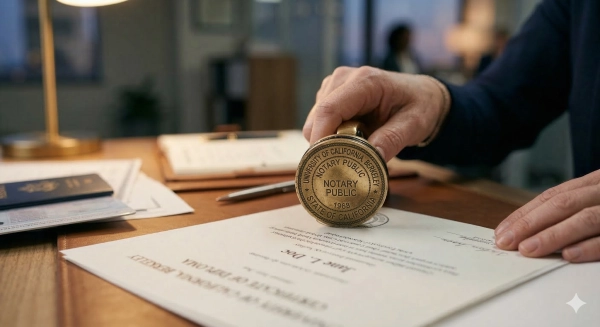
A notary public may notarize and affirm a true copy of a document. Common examples are passports for bank due diligence, diplomas for university applications and corporate records for tenders. The notary compares the original with the copy, verifies on a page-by-page basis that it coincides and attaches a certificate that the copy is a true copy of the original shown. For worldwide usage, some agencies require color copies, page numbering or precise wording, so solicit the destination’s sample text. Some documents, such as birth or marriage certificates, ought to be provided as certificates, not hospital card photocopies. For the US or Asia, there will be subsequent apostille or legalization steps. The notary’s certificate and seal is the foundation for those.
Identity Verification
Notaries check identity prior to a single transaction. They see valid government photo ID, match the photo and name, and log info. They verify capacity, willingness, and comprehension, and can decline if the signee appears pressured. For corporate signings, they might verify authorization papers. Spend one long meeting and you’ve got an oath, a signature witness, and a copy certified all at once.
The Commissioner for Oaths Role
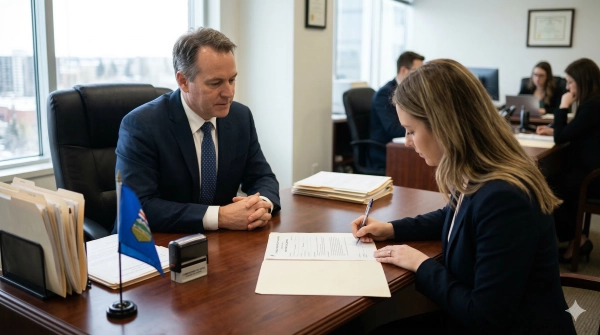
Commissioners for Oaths in Alberta have a specific legal role under Alberta’s Notaries and Commissioners Act. They administer oaths and take and receive affidavits, declarations, and affirmations for use in Alberta only. Appointments are given under the same Act and some public officials have this authority ex officio.
Administering Oaths
Commissioning an oath is a process where someone swears that the information contained in a document is true. The commissioner verifies identity with acceptable photo ID, makes sure the signer comprehends the oath and that the document isn’t incomplete. The individual then swears or affirms the truth prior to signing. The Commissioner for Oaths signs, writes their name, “A Commissioner for Oaths in and for Alberta” and where applicable, the expiry date of their commission. If the oath is for a document prepared for use outside Alberta, the commissioner ought to refuse, as their authority extends only to documents for use in Alberta.
Typical cases involve court affidavits for civil claims, proof-of-loss forms for local insurers, and statutory forms for provincial programs. In addition, a judge, a lawyer, a member of the Alberta legislature, or a municipal councillor can swear an oath as their office empowers them to do so. For a simple file, consider someone swearing an affidavit about a car accident in Calgary for an Alberta court record. That covers the range.
Taking Declarations
A declaration or affirmation is a secular vow that a statement is accurate. The actions parallel an oath but with secular terminology. The commissioner verifies ID, confirms the signer is acting voluntarily, and that the document is to be used in Alberta. The signer swears true and signs. The commissioner certifies the affidavit with all necessary information and if applicable the expiration date.
Applications differ. A travel consent letter for a kid solely traveling in Canada with a declared parent statement. A name change affidavit related to Alberta records. A declaration of lost property for a local agency. If a party is unable to sign, the commissioner cannot proceed unless statute permits an alternative means and capacity is evident.
Witnessing Signatures
Commissioners may witness signatures where the document requires an oath, declaration, or affirmation. They don’t certify true copies or notarize identities for out-of-province use. Their role is to verify identity, witness the signature, and fill out the jurat or declaration attestation. They make sure the signee comprehends and is not being pressured. For instance, a housing affidavit for an Edmonton tenancy dispute or a statutory declaration for an Alberta professional license renewal. If it is destined for another province or a foreign country, a Notary Public, who has greater power, might be necessary instead. Errors to avoid include blank spaces, unsigned initials on amendments, and missing commission expiry dates.
Which Service Do You Need?
Scope depends on where it’s going to be used. Alberta has various officers and rules for provincial, out-of-province, and international use. The correct solution stops reprocessing or refusal.
Provincial Matters
Use a Commissioner for Oaths when your affidavit, statutory declaration or affirmation is signed in Alberta and will be used in Alberta. Commissioners can administer oaths and take and receive affidavits, affirmations and declarations in Alberta for use in Alberta. Think of something that addresses common regular requirements, like a name change statement with an Alberta organization, an insurance proof-of-loss with an Alberta-based company, or a parenting affidavit for an Alberta court.
A Notary Public can notarize for use in Alberta and may be required if a recipient requests a notary seal or if the same person is to do both local and cross-border paperwork. In some limited cases, some commissioners will swear an oath for a document executed outside Alberta if the document is to be used in Alberta, but this is limited and context-specific. When in doubt, check with the receiving office prior to signing.
Out-of-Province Use
If you are signing for documents in another province or territory in Canada, the document should be sworn or affirmed before a Notary Public. A commissioner’s authority does not travel; it stops at Alberta’s borders. Examples are an Ontario real estate affidavit, a BC pension form or a Quebec travel consent letter accepted across Canada. Oaths, affidavits, affirmations and declarations sworn or affirmed out of Alberta before a notary public have the same effect as if sworn or affirmed in Alberta, which assists when you have to sign while on the road. The receiving office might have form or ID requirements, such as two recent IDs, a wet-ink signature, witness restrictions, etc. Check the rules first to avoid the redo. About which service do you need.
International Use
If you’re signing outside Canada, the document should be sworn or affirmed before a Notary Public. A Notary Public can act for documents to be used in Alberta, across Canada and internationally. Typical items include a power of attorney for property in the European Union, a university diploma copy for the United States, or a company resolution for the United Arab Emirates. Most countries after that need it authenticated and legalized or apostilled once Canada’s apostille system is accepted wherever you file. Look up the destination country’s procedures, CAD fees, timing in days, and courier time.
Navigating Digital Documents

Digital workflows now underlie notary services in Alberta and beyond. We sign, share, and keep files online. Rules and tools have changed to suit that reality, with efficiency and hazard management in mind.
Virtual Commissioning
Virtual commissioning enables a notary to identify and commission affidavits or statutory declarations during a secure video call. The notary verifies government ID, witnesses the signing, and makes necessary notes. Many platforms include liveness checks, knowledge-based ID questions, and tamper-evident audit trails. This reduces travel and assists those in remote locations and tight time zones. It accommodates cross-border time for international clients requiring Alberta documents to be commissioned. You need to verify your document can be commissioned online prior to booking. Others need to be signed in person because of the law, recipient policy, or risk rules.
Electronic Signatures
Electronic signatures are acceptable for a wide range of purposes in Alberta, and in reality they’ve become a standard approach to having documents notarized or commissioned. Remote Online Notarization (RON) allows for live signing with an online notary who applies an e-signature and digital notary seal. Most services allow you to upload files by QR code in seconds and complete the entire session within 7 minutes if the ID checks clear.
Unfortunately, not all documents are included. Items without an original signature or seal, with unknown seals, unverifiable signatures, or laminated cannot be authenticated. A few agencies insist on wet-ink originals, so check with your final recipient before you opt for e-sign.
Language is an issue. If it’s not in English or French, you might need a translator’s certificate. The translation has to be according to the receiving agency’s requirements, which may include a translator’s affidavit and certification.
Future Challenges
Adoption is growing, there are still holes. Cross-jurisdiction rules don’t always agree, and recipients aren’t all equally comfortable with RON. Identity fraud risk drives continuous upgrades to authentication. E-notarized records stored for the long term must comply with retention, privacy, and encryption requirements. Platform choice matters — opt for providers with visible audit trails, strong key management and export capabilities. Training never stops, signers and notaries both require explicit checklists, dry runs, and contingency when video or uploads fail.
Finding a Trusted Professional
Finding a notary in Alberta requires specific checks on qualifications, compatibility, and procedure to make sure documents comply with legal requirements and you’re comfortable with the outcome.
Begin with credentials. In Alberta, for instance, a Notary Public is appointed under provincial law, and many are lawyers. Request their name, appointment number, and jurisdiction. Make sure they are currently practicing and authorized to notarize your document type, e.g. Affidavits, statutory declarations, certified true copies, or international documents that might require additional processes like an apostille alternative (authentication and legalization). If your document is bound for another country, confirm the notary knows the chain: notarization, provincial authentication, and then consular legalization.
Check experience next. Inquire how frequently they process such documents, typical mistakes they look out for, and usual turnaround times. For instance, if you need a notarized certified copy of a passport for a visa, ask how they check identity, if they insist on seeing the original, and how they format the notarial certificate to comply with foreign consulate requirements. If you’re looking for a real estate affidavit, inquire about witness regulations and if remote notarization is supported and permitted for your particular situation.
Use social proof. Personal referrals from friends, family or colleagues can truncate the search because they represent first-hand experience. Reviews and ratings online will give you a sense of work ethic, communication, timeliness and attention to detail. Search for patterns in comments instead of isolated plaudits or criticisms and skim for details on costs, availability and their approach to issues.
Check qualifications and background. Validate appointment via provincial and inquire about memberships. If it’s a lawyer notary, consult the Law Society of Alberta directory for standing and disciplinary records. Request proof of insurance, particularly if the stakes are high, such as in cross-border corporate filings.
Gauge fit and communication. A trusted notary details what they will verify, which IDs you need, and what they won’t do. They do not counsel on content unless they are your attorney. Observe how they provide price quotes, prep steps, privacy, and secure storage. Plain answers show your appointment a smoother path.
Anticipate spending time. Narrow your list, compare, and pick the one who fits your criteria, checks out on paper, and feels like someone you can trust.
Conclusion
To finish, the way is open. Fit the job to the appropriate position, and then just schedule. Require an affidavit for a form in Alberta? A Commissioner for Oaths works. Looking for a deed, power of attorney, or a document for use outside Alberta? A Notary Public will do.
To schedule the visit, bring an ID and unsigned document. If you’re working online, see if the rule permits video notarization. Request a fee quote up front. For peace of mind, choose a professional with transparent pricing, quick responses, and feedback referencing actual documents like a visa application or property transfer.
To begin, make a quick list. Phone 2 offices, inquire about your document, cost, and timing. Then book the one that fits.
Frequently Asked Questions
What is the difference between a Notary Public and a Commissioner for Oaths in Alberta?
Notary Alberta – A Notary Public can notarize documents for use inside and outside Alberta and certify true copies. A Commissioner for Oaths may administer oaths, affirmations, and declarations for use in Alberta only. Select according to the location of where your document will be used.
When do I need a Notary Public in Alberta?
Use a Notary Public for documents going outside Alberta or abroad. Common needs include certified true copies of IDs, powers of attorney, consent to travel letters, and notarized affidavits required by foreign authorities or federal bodies.
When is a Commissioner for Oaths sufficient?
Use a Commissioner for Oaths for affidavits, statutory declarations and forms used in Alberta. Examples include insurance claims, provincial court forms, and local government paperwork that does not require notarization or international use.
Can I notarize documents online in Alberta?
Yep, sometimes. Remote online notarization is permitted provided that the Notary adheres to Alberta regulations and takes measures to verify identity. Confirm that the receiving organization will accept digital notarization.
Are certified true copies accepted outside Alberta?
Frequently, yes, if carried out by an Alberta Notary Public. A lot of foreign bodies will accept notarized copies. For some countries, you may require authentication and legalization (apostille not yet effective in Canada). Check the requirements initially.
How do I choose a trusted Notary or Commissioner in Alberta?
Confirm appointment policy, experience with your document type, fees, and availability. See what reviews are available and inquire about digital services. Make sure they adhere to Alberta legislation and offer safe ID validation and logging.
What ID do I need for notarization or commissioning?
Bring valid, government-issued photo ID, such as a passport or driver’s license. Certain papers might need two IDs. IDs need to have matching names to the document. Check with the expert beforehand if further evidence is required.
Not what you were looking for? Explore Nigro Manucci LLP’s legal services to learn how experienced lawyers can help with real estate, corporate matters, notary services, and estate planning in Alberta.
Looking for more information about notaries and legal procedures in Alberta? These official resources explain the provincial legal system.
Canadian Legal System Overview